Highlights
Favorite quotes and passages from books I've read

-
It’s hard to imagine a surer sign that one is dealing with an irrational economic system than the fact that the prospect of eliminating drudgery is considered to be a problem.
-
Conservative voters, I would suggest, tend to resent intellectuals more than they resent rich people, because they can imagine a scenario in which they or their children might become rich, but cannot possibly imagine one in which they could ever become a member of the cultural elite.
-
Whereby we feel that pain in the workplace is the only possible justification for our furtive consumer pleasures, and, at the same time, the fact that our jobs thus come to eat up more and more of our waking existence means that we do not have the luxury of—as Kathi Weeks has so concisely put it—“a life,” and that, in turn, means that furtive consumer pleasures are the only ones we have time to afford.
-
In death, the essence of a soul’s being on earth is seen as marked by the love they felt for, and received from, their husbands, wives, and children, or sometimes also by what military unit they served with in time of war. These are all things which involve both intense emotional commitment, and the giving and taking of life. While alive, in contrast, the first question anyone was likely to have asked on meeting any of those people was, “What do you do for a living?”
-
Together we create the world we inhabit. Yet if any one of us tried to imagine a world we’d like to live in, who would come up with one exactly like the one that currently exists? We can all imagine a better world. Why can’t we just create one? Why does it seem so inconceivable to just stop making capitalism? Or government? Or at the very least bad service providers and annoying bureaucratic red tape?
-
If the market were always right, then someone being paid $40,000 to play computer games and gossip with old friends on WhatsApp all day would have to accept that the service he provides for the company by playing computer games and gossiping was actually worth $40,000. It clearly is not. So markets can’t always be right.
-
If it’s really true that as much of half the work we do could be eliminated without any significant effect on overall productivity, why not just redistribute the remaining work in such a way that everyone is working four-hour days? Or four-day weeks with four months’ yearly vacation time? Or some similarly easygoing arrangement? Why not start shutting down the global work machine? If nothing else, it would probably be the most effective thing we could do to put a break on global warming.
-
I never heard a single case of a supervisor just sitting down with an employee and spelling out the rules, simply and honestly, regarding when she had to work, when she didn’t, and how she could and could not behave when she wasn’t working.
-
Freedom is our ability to make things up just for the sake of being able to do so.
-
37 percent to 40 percent of jobs are completely pointless, and at least 50 percent of the work done in nonpointless office jobs is equally pointless, we can probably conclude that at least half of all work being done in our society could be eliminated without making any real difference at all.
-
There is something very wrong with what we have made ourselves. We have become a civilization based on work—not even “productive work” but work as an end and meaning in itself.
-
There seems to be a broad consensus not so much even that work is good, but that not working is very bad; that anyone who is not slaving away harder than he’d like at something he doesn’t especially enjoy is a bad person, a scrounger, a skiver, a contemptible parasite unworthy of sympathy or public relief.

The Case Against Travel | The New Yorker
-
Tourism is marked by its locomotive character. “I went to France.” O.K., but what did you do there? “I went to the Louvre.” O.K., but what did you do there? “I went to see the ‘Mona Lisa.’ ” That is, before quickly moving on: apparently, many people spend just fifteen seconds looking at the “Mona Lisa.” It’s locomotion all the way down.
-
“The grass is always greener on the side that’s fertilized with bullshit.”
-
“Invest in preparedness, not in prediction.”
-
People gauge their well-being relative to those around them, and luxuries become necessities in a remarkably short period of time when the people around you become better off. Investor Charlie Munger once noted that the world isn’t driven by greed; it’s driven by envy.
-
If you have the right answer, you may or may not get ahead. If you have the wrong answer but you’re a good storyteller, you’ll probably get ahead (for a while). If you have the right answer and you’re a good storyteller, you’ll almost certainly get ahead.
Why Generalists Own the Future
-
In an allocation economy, the person who wins isn’t the expert who knows the exact answer to a question.
It’s the one who knows which questions to ask in the first place.

Putting Ideas Into Words
-
If writing down your ideas always makes them more precise and more complete, then no one who hasn't written about a topic has fully formed ideas about it. And someone who never writes has no fully formed ideas about anything nontrivial.
-
We are defined by what we choose to reject. And if we reject nothing (perhaps in fear of being rejected by something ourselves), we essentially have no identity at all.
-
The key to a good life is not giving a fuck about more; it’s giving a fuck about less, giving a fuck about only what is true and immediate and important.
-
Problems never stop; they merely get exchanged and/or upgraded.
-
The more interesting question is the pain. What is the pain that you want to sustain? That’s the hard question that matters, the question that will actually get you somewhere.
-
In environments where extrinsic rewards are most salient, many people work only to the point that triggers the reward—and no further. So if students get a prize for reading three books, many won’t pick up a fourth, let alone embark on a lifetime of reading—just as executives who hit their quarterly numbers often won’t boost earnings a penny more, let alone contemplate the long-term health of their company.
-
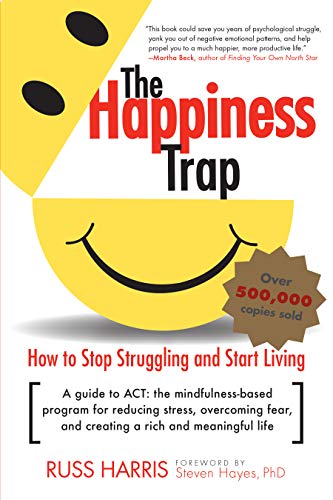
The bottom line is not whether a thought is positive or negative, true or false, pleasant or unpleasant, optimistic or pessimistic, but whether it helps you create a fulfilling life.
-
So here is the happiness trap in a nutshell: to find happiness, we try to avoid or get rid of bad feelings, but the harder we try, the more bad feelings we create.
-
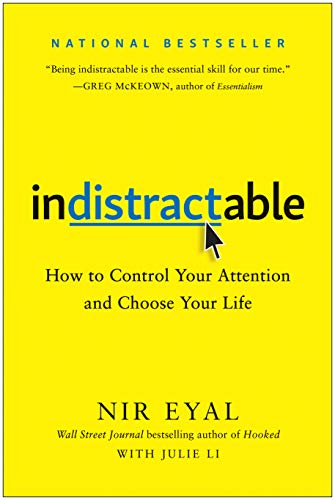
Because we turn to our devices to escape discomfort, we often reach for our tech tools to feel better when we experience a lack of control. Checking email or chiming in on a group chat thread provides the feeling of being productive, regardless of whether our actions are actually making things better.
-
‘We’re doing a lot of controlling them in their school environments and it’s no surprise that they should then want to turn to an environment where they can feel a lot of agency and a lot of autonomy in what they’re doing,’ Ryan says. ‘We think of [tech use] as kind of an evil in the world, but it’s an evil we have created a gravitational pull around by the alternatives we’ve set up.’
-
A study by PPAI Research found only a third of Americans keep a daily schedule, which means the vast majority wake up every morning with no formal plans. Our most precious asset – our time – is unguarded, just waiting for someone to steal it.
-
You can’t call something a distraction unless you know what it is distracting you from. Planning ahead is the only way to know the difference between traction and distraction.
-
The people you love deserve more than getting whatever time is left over. If someone is important to you, make regular time for them on your calendar.
-
The Fogg Behaviour Model states that for a behaviour (B) to occur, three things must be present at the same time: motivation (M), ability (A) and a trigger (T). More simply, B=MAT.
-
We need to learn how to avoid distraction. Living the life we want not only requires doing the right things, but also necessitates not doing the things we know we’ll regret.
-
Let’s think back to the tale of Tantalus. What was his curse exactly? Was it never-ending hunger and thirst? Not really. What would have happened to Tantalus if he had just stopped reaching? He was already in hell, after all, and dead people don’t need food and water last time I checked. The curse is not that Tantalus spends all eternity reaching for things just out of reach, but rather his obliviousness to the greater folly of his actions. Tantalus’ curse was his blindness to the fact he didn’t need those things in the first place. That’s the real moral of the story.
-
We don’t run out of willpower. Believing we do makes us less likely to accomplish our goals, by providing a rationale to quit when we could otherwise persist.
Show Your Work!
-
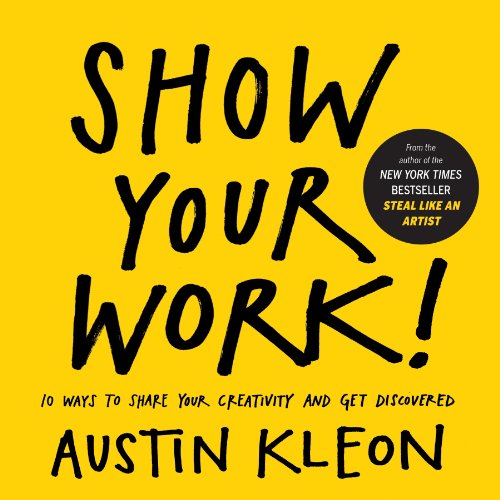
Where do you get your inspiration? What sorts of things do you fill your head with? What do you read? Do you subscribe to anything? What sites do you visit on the Internet? What music do you listen to? What movies do you see? Do you look at art? What do you collect? What’s inside your scrapbook? What do you pin to the corkboard above your desk? What do you stick on your refrigerator? Who’s done work that you admire? Who do you steal ideas from? Do you have any heroes? Who do you follow online? Who are the practitioners you look up to in your field?
-
So, what makes for great attribution? Attribution is all about providing context for what you’re sharing: what the work is, who made it, how they made it, when and where it was made, why you’re sharing it, why people should care about it, and where people can see some more work like it. Attribution is about putting little museum labels next to the stuff you share.
-
A good pitch is set up in three acts: The first act is the past, the second act is the present, and the third act is the future.
-
If you’re only pointing to your own stuff online, you’re doing it wrong. You have to be a connector. The writer Blake Butler calls this being an open node. If you want to get, you have to give. If you want to be noticed, you have to notice. Shut up and listen once in a while. Be thoughtful. Be considerate. Don’t turn into human spam. Be an open node.
-
You just have to be as generous as you can, but selfish enough to get your work done.
-
When you feel like you’ve learned whatever there is to learn from what you’re doing, it’s time to change course and find something new to learn so that you can move forward. You can’t be content with mastery; you have to push yourself to become a student again. “Anyone who isn’t embarrassed of who they were last year probably isn’t learning enough,” writes author Alain de Botton.
-
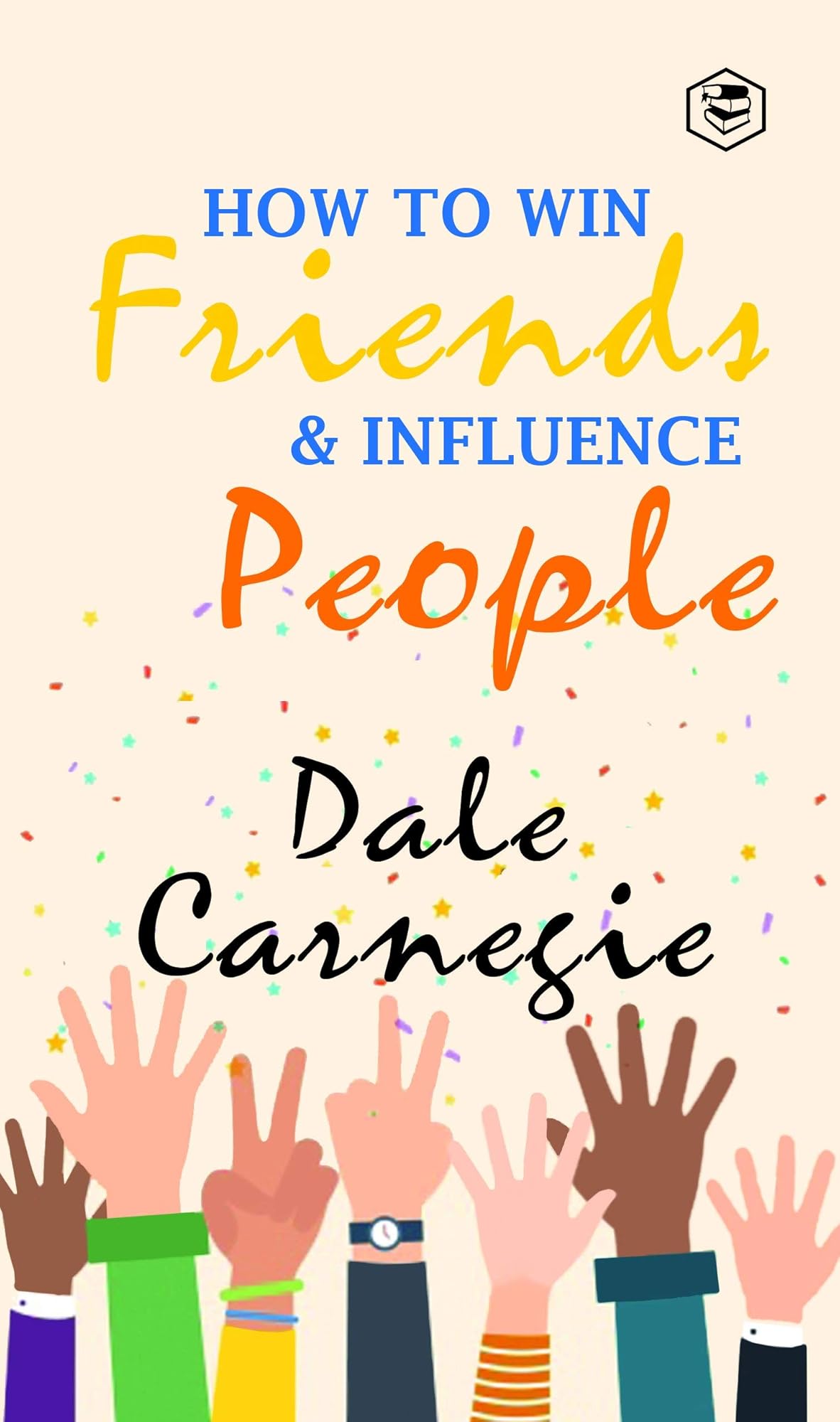
PRINCIPLE 1 The only way to get the best of an argument is to avoid it.
PRINCIPLE 2 Show respect for the other person’s opinions. Never say, ‘You’re wrong.’
PRINCIPLE 3 If you are wrong, admit it quickly and emphatically.
PRINCIPLE 4 Begin in a friendly way.
PRINCIPLE 5 Get the other person saying ‘yes, yes’ immediately.
PRINCIPLE 6 Let the other person do a great deal of the talking.
PRINCIPLE 7 Let the other person feel that the idea is his or hers.
PRINCIPLE 8 Try honestly to see things from the other person’s point of view.
PRINCIPLE 9 Be sympathetic with the other person’s ideas and desires.
PRINCIPLE 10 Appeal to the nobler motives.
PRINCIPLE 11 Dramatize your ideas.
PRINCIPLE 12 Throw down a challenge.
-
You can’t win an argument. You can’t because if you lose it, you lose it; and if you win it, you lose it. Why? Well, suppose you triumph over the other man and shoot his argument full of holes and prove that he is non compos mentis. Then what? You will feel fine. But what about him? You have made him feel inferior. You have hurt his pride. He will resent your triumph.
-
Buddha said: ‘Hatred is never ended by hatred but by love,’ and a misunderstanding is never ended by an argument but by tact, diplomacy, conciliation and a sympathetic desire to see the other person’s viewpoint.
-
If you can be sure of being right only 55 percent of the time, you can go down to Wall Street and make a million dollars a day. If you can’t be sure of being right even 55 percent of the time, why should you tell other people they are wrong?
-
If a person makes a statement that you think is wrong—yes, even that you know is wrong—isn’t it better to begin by saying: ‘Well, now, look. I thought otherwise but I may be wrong. I frequently am. And if I am wrong, I want to be put right. Let’s examine the facts.’ There’s magic, positive magic, in such phrases as: ‘I may be wrong, I frequently am. Let’s examine the facts.’ Nobody in the heavens above or on the earth beneath or in the waters under the earth will ever object to your saying: ‘I may be wrong. Let’s examine the facts.’
-
‘There is nothing either good or bad,’ said Shakespeare, ‘but thinking makes it so.’
-
When dealing with people, let us remember we are not dealing with creatures of logic. We are dealing with creatures of emotion, creatures bristling with prejudices and motivated by pride and vanity.
-
Here is one of the best bits of advice ever given about the fine art of human relationships. ‘If there is any one secret of success,’ said Henry Ford, ‘it lies in the ability to get the other person’s point of view and see things from that person’s angle as well as from your own.’
-
William Winter once remarked that ‘self-expression is the dominant necessity of human nature.’ Why can’t we adapt this same psychology to business dealings? When we have a brilliant idea, instead of making others think it is ours, why not let them cook and stir the idea themselves. They will then regard it as their own; they will like it and maybe eat a couple of helpings of it.
Make Time
-
You only waste time if you’re not intentional about how you spend it.
-
The second force competing for your time is what we call the Infinity Pools. Infinity Pools are apps and other sources of endlessly replenishing content. If you can pull to refresh, it’s an Infinity Pool. If it streams, it’s an Infinity Pool. This always-available, always-new entertainment is your reward for the exhaustion of constant busyness.
This Could Be Our Future
-
The truth is that everything is made up. The same way Kickstarter was made up. Some people think of something and try to bring it into existence. If other people start believing in this new idea, it becomes real.

Click! How to Encourage Clicks Without Shady Tricks
-
An abundance of choice has led us to prioritize the easiest option over the best, because finding the best is just too time-consuming.
Free Will
-
You are not in control of your mind—because you, as a conscious agent, are only part of your mind, living at the mercy of other parts. You can do what you decide to do—but you cannot decide what you will decide to do.